
Testing Times

Those familiar with sessions I’ve written and use regularly in the Training Peaks portal use Functional Threshold Power [FTP] as a metric to set effort. Everyone of you is different and this should never be used as a badge of honour as some ‘weekend warriors’ seem to think it is. It’s just one of the ways to set proper training zones and is probably the most commonly used.

So how can you find FTP?

It used to be described as the effort you can sustain for 1 hour or a typical effort for a 25-mile time trial on the road. In reality it’s simply your aerobic threshold.

There are ways to find this accurately, most well-known is the 20-minute threshold test. Using a specific warm up protocol - without which the test result is in valid, you then ride to your maximum effort for the 20 minutes - something akin to a 10-mile time trial, taking 95% of your average power output to calculate FTP. It’s not pleasant and frankly as a sprinter fills me with horror!


The other known way to test is the Max Ramp. Assessing an individual’s potential for the start ramp power is key, for most male riders of average ability I’d start around 140w, the test then increases 20w per minute to failure. This is most important as some will stop when it simply hurts! Female riders ramp at 15w per minute.

Taking the average power of the last full minute you get MAP – Maximum Aerobic Power sometimes called MMP – Maximum Minute Power. Taking 75% will give an indication of FTP. The max ramp test should last no more than 12 minutes and comes with a few warnings.  It’s a maximal test that also finds your maximum heart rate. I always question the health history of older riders.


Recently our local gym has installed new spin bikes which offer ‘training by colour’ on their screens – this is essentially a ‘jazzed up’ version of the 6-zone traditional Coggan Allen FTP zone system but is good fun as long as the FTP number you input on the bike is correct otherwise the only person you’re fooling is yourself and in some cases the instructor.

The bikes offer a different FTP test protocol that is interesting and perhaps a little less invasive but still requires a little hard work.

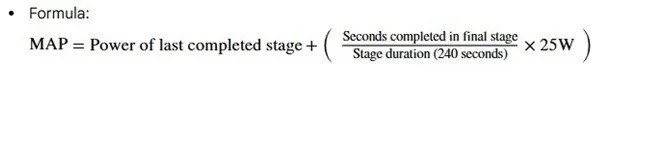
After warming up for 10 minutes you commence a ramp that increases by 25w every 4-minutes to failure. You then calculate FTP at 82.5% of the MAP but here’s the clever bit, unlike the Max Ramp that only uses the last full minute to calculate MAP this test uses the power of the uncompleted stage or ramp as well
 

Why Recovery Phase?

The training year is usually concluded with a short period during which both the volume and intensity of training are considerably reduced. After constant training phases and event planning this is often a welcome break, re-introduces freshness and ‘hunger’ to train hard.

 It’s often a good time to introduce new methods of basic training that have not been tried before, and an excellent opportunity to review the year’s training and events with the intention of planning the following year.

Planning a year’s training and events starts with identifying goals (targets) to aim at.

This gives the plan a sense of purpose. However, goals need to be realistic and

Flexible if it is to be seen as part of an overall development. It will need to be modified in the light of what happened in the previous year, and will itself provide the platform for planning the following year.

Goals should be specific (eg: ‘I want to be three minutes faster in a 25 mile TT’ or ‘I want to complete a 200k audax’.

Avoid goals that are vague for example ’I want to a better standard next year.

A desired goal should be measurable in some way. Assessment of progress is an excellent incentive to keep on track. Goals need to be decided and agreed with guidance where necessary from me. You are more likely to accept goals if you set them, rather than have them set for you, goals should be performance-based rather than outcome-based.

That is, the success of the goal should rest on you the performer achieving a desired level of performance which is usually directly under your control rather than those that rest on the outcome of an event: these are not completely under your control because they can be affected by such things as course conditions, weather, and other riders.

Goals need to be realistic. If they are too easy, they will provide little incentive; too hard and they may lead to discouragement. There should be a time set by which the goal is to be achieved. A series of minor goals, to be achieved within a specified time, leading up to a major goal is a good way to provide progression, as well as a means of assessment. The goals should be challenging, and be of some importance. It is also important to record the goals in some way. This helps to increase commitment by being a constant reminder. The major yearly goals should be a realistic set of targets, which may need revision later in the year - it may be necessary to downgrade or upgrade goals in the light of what actually happens as the year unfolds.


Magic Numbers

You’ve probably noticed a few numbers appear on your training stats but apart from watts, bpm and FTP very few know what they mean so let me explain – I’ll take them in the usual order they appear.


Intensity Factor – IF

 NP ÷ FTP

[NP = Normalised Power is similar to average power but with power spikes smoothed it’s a better measure of ride with variable effort.

 Typical IF values for various training sessions or races are:

  • Less than 0.75 recovery rides

  • 0.75-0.85 endurance-paced training rides

  • 0.85-0.95 tempo rides, aerobic and anaerobic interval workouts (work and rest periods combined), longer (>2.5 h) road races

  • 0.95-1.05 lactate threshold intervals, shorter (<2.5 h) road races, criteriums, circuit races, longer (25m) TTs

  • 1.05-1.15 shorter (10m) TTs, track points race

  • Greater than 1.15 track pursuit, track elimination races

Variability Index - VI

NP ÷ Average Power

Typical values to look for:

Steady endurance ride         1.00-1.02

Flat Road Race                      1.00-1.06

Flat Time Trial                       1.00-1.08

Flat Criterium                         1.06-1.35

Hilly Road Race                     1.20-1.35

Cyclocross Race                    1.13-1.50

 Efficiency Factor – EF

NP ÷ Average Heart Rate

To put it simply decoupling. It shows how hard your heart is working for a relative effort. Typical scores? Ah there’s the problem, its specific to your numbers and you need to establish a trend and can only compare with similar workouts. As you become more efficient score will increase.


Cycling on a budget

Let’s face it our simple sport of cycling has become a little expensive in the last few years. The downturn of the cycling industry shows that maybe it’s getting just deserts for trying to persuade us to part with thousands of pounds for the latest fad. One prime example is dropping a clubman’s favourite mechanical groupset in favour of electronic only versions. To my mind it’s a mistake. We’d all like a pro level road bike but at £12,000+ few can afford to buy and often you are just paying for a brand name. With a little research and legwork, equal and sometimes better can be purchased at a fraction of the cost.

A classic example of this is the recently released Chinese made EDS TX electronic gearset available as both rim brake and disc versions. Its aimed initially as an upgrade so it’s not a complete groupset but it can deal with all gear configurations up to 14 speeds both Campag, and Shimano/SRAM. It also comes at a price point few of the leading brands can match.

Carbon frames is another area where you can save pennies. You have to accept that you mostly get what you pay for. Quite simply lower price points will contain more resin that carbon so cheaper will be heavier. Take for example two extremes a Colnago V3rs and Planet X E101 both carbon aero frames and highly regarded. The Colnago will cost you somewhere north of £4000, the Planet X £700. Ironically both are made in the Far East. I’m fortunate enough to own both and I can honestly say the Planet X is faster and handles better. However, there are downsides. You can ride the Colnago all day in comfort, it seems to glide over Britain’s poor road surfaces, the Planet X by comparison will shake fillings out of your teeth!

Further money can be saved by using the second-hand market. Frames don’t seem to sell for huge amounts. Buyer beware, do your homework, ensure any brand is genuine, the item isn’t stolen or crash damaged. Any doubt, walk away. The latest model isn’t necessary the best borne out by Jonathan Shubert using a 2009 Giant Trinity TT frame in November 2020 to smash the RRA 100-mile record.

Ok how about other things such as energy drinks? A few years ago I looked at the ingredients of my branded energy drink and guess what? 98% is maltodextrin. Now I buy just maltodextrin powder, and mix as instructed, flavour with orange squash and add a pinch of salt. You can also use same as a simple recovery drink by substituting low fat milk to add protein and milk shake flavouring instead of orange squash. Maltodextrin powder is freely available and a fraction of the cost of your branded drink – try it, you’ve nothing to lose.

I have a few personal preferences with my cycling kit, one is misguided but I prefer white shoes. Horrible out of the box and look better once they have a few miles/km on them but occasionally they require a good clean this is where a thing called a Kitchen Eraser comes in. You can get them from the housewares section at the supermarket and they look like a small white rectangular sponge. Use with a little water and detergent. Great for cleaning white shoes and they double up to get your pots and pans sparkling.

Tools; if you only buy one tool, make it a chain measurer. Check your chain regularly and once it gets past the .75 mark, buy a new chain. This will preserve the life of your gear cassette and save you having to change that as well – look at the cost of a top flight 11 or 12 speed cassette and compare with around £10 for the tool and this will make sense.

TP Virtual - Zwift killer or just another turbo training app?

News reaches us that TrainingPeaks have acquired IndieVelo and changed its name to TP Virtual. This joins an already crowded market of indoor cycling apps of Zwift, Trainer Road, Rouvy, My Whoosh and Wattbike Hub to name a few.

I’ll admit straight away I’m not a fan of these apps with the exception of Wattbike Hub which is purely numbers and performance driven. It’s a personal preference and probably swayed by the brand of indoor bike I ride. Those I coach are also split 50/50 with some worshiping at the altar of Zwift, whilst others would rather stick pins in their eyes than actually have something come between them and a meaningful training session.

But…. as quite a lot of coaches use TP scheduling this new offering is enticing a few down ‘off the fence’. Cost has a bit to do with it. Zwift has become yet another monthly cost to your cycling enjoyment and at £12.99 pm doesn’t come cheap. There are obviously no free lunches in this world unless you’re a member of the new UK government. MyWhoosh is currently free but is being underwritten by UAE - that’s the country, not the team. The new TP Virtual has good DNA being developed from IndieVelo, a free Zwift clone with over 40k users and developed by the genius that is Dr Gilbert the man behind Zwift’s anti-cheating program. No we’re not talking about your mate who rides at under 70kg on Zwift but can’t get his huge carcass up hills on club rides, we’re talking about the pro side of the sport where he’s hung quite a few out to dry. I believe he also had a hand in the now defunct RGT.

The clever business model behind TP Virtual must be worrying for a few. While still under development its free till Spring 2025 then its included with your TP Premium subscription, which if you buy through your coach can be as little as £7 pm – OK you have to pay your coach as well but trust me that’s always money well spent.

Already there’s a app for Apple devices and the main thing for me is to get it to work seamlessly with TP training accounts as do the other established apps.

We’ll see, but in the next 18 months the world of online cycling could be a very different place and a few might have finally escaped Watopia.

Numbers

I overheard a recent conversation between two cyclists, one was explaining to another that the reason why he doesn’t compete is his FTP is lower than his mate who does.

This led me to think that perhaps people don’t understand what FTP actually is and its relationship to cycling performance ……let’s start at the beginning.

 As a cycling coach I regularly test people to find their true personal performance numbers so I can extrapolate training zones – simple.

Amongst these metrics is FTP or to give it its full title Functional Threshold Power which is quite simply the maximum average power you can produce for 1 hour on a bike and is quite handy for training and racing an athlete to their potential.

Some seem to ‘wear’ FTP as a badge of honour but, and this is a big but, your weight also is a huge factor because power to weight is just one of the things that determine how good you are as a cyclist.

The best example of this is I coach some riders who weigh under 60kg with an FTP in the low 200’s and riders over 90kg with an FTP of just over 300w – who’s going to be better? The answer is probably much the same. OK there are a few other variables but you get my point.

Which brings us back to power to weight ratio, hereafter referred to as watts per kilo [w/kg].

There are two ways of expressing it, either maximum or FTP.

Your maximum power is usually decided by a ramp test and is the average power you can produce in the final minute before you decide it was a bad idea and want to go home. This is referred to as MAP – Maximum Aerobic Power or MMP Maximum Minute Power

The classic ‘Threshold or FTP test’ to give it its commercial name, was ‘invented’ by Messrs Allen and Coggan who also own and run an organisation you may have heard of called TrainingPeaks. The test involves a specific warm up protocol followed by a controlled flat out 20-minute effort. We then take 95% of the average power from the 20-minute test to determine Threshold Power [FTP]. This is simply because no one wants to test for the full hour.  With me so far? Good.

For both tests simple maths is applied to divide the rider’s power either MAP/MMP or FTP by the rider’s weight. The figure you end up with is w/kg. For a club level male rider, the max test aim is around 5w/kg and 3.7 w/kg on the FTP scale.  

Most serious cyclists ride around with a GPS attached to the front of their bikes these days – many don’t have a clue what it’s telling them so long as the ride looks good on Strava. With many set up with incorrect zones - heart rate, power and weight, those results can be misleading.

So…if you want a reputable cycling coach to take you on, your question should be ‘I have this goal I’m struggling with and want to improve’ not ‘I want to improve my FTP’ you’ll then have a good conversation and usually a long and fruitful relationship.

Motivation

I’m regularly asked about this in relation to cycle training these are some of my thoughts….


As with all things one simple question is always top; ‘Why am I doing this?’

There are many possible answers but primary to these can be summed up with one word ‘goals’. Spend time thinking about these and it helps to make your goals short, medium and long term.  

Everyone is different, in my case goals were always competition based. Your goals might also be an event or race, keeping fit, enjoying the countryside, being able to tackle certain terrain or simply setting a few personal best’s. Focus on these and now hopefully you have the answer to the question.

Next, set timescales to achieve your goals, it helps to write them down, refer to them regularly or keep a diary to see how you are doing. Think of this as your ‘road map’ – unless you know where you’re going, you’ll flounder round in circles and never reach your destination.

Be careful though, business guru Zig Ziglar once wrote ‘If you aim at nothing, you’ll hit it every time’. Who do you know like that? Be imaginative, stretch yourself. We’re all capable of more than we think – much more!

Everyone has their own level, not all of us are as naturally gifted as others but being active elevates you above the average couch potato. Life wouldn’t be fun if we could do everything perfect first time, so expect to make mistakes and have failures, learn from these and find a way forward.

Go for it!  


Can I coach anyone?

I suppose the answer to this is yes and no which I admit is a complete cop-out. This answer is because some people believe they are un-coachable, then by entering into the process and changing a few habits suddenly find they are. I also coach people at all levels not just elite athletes. As far as I’m concerned, the biggest reward comes from the ordinary doing the extraordinary.

I read with interest coach Joe Friel’s take on this. Joe has written many coaching books and is co-founder of online coaching platform TrainingPeaks. He admits early in his coaching career he ‘fired’ two athletes. Put simply both were pursuing lifestyle straits that were at odds with physiological training. He has since learned to filter potential clients by asking a few often-uncomfortable questions before taking them on.

Like most coaches I have an online presence and spend a little cash to promote my coaching business. The website has a contact form which comes into my email inbox. Most enquiries are genuine and I always reply outlining services or expand on similar areas of expertise that I have coached riders in. I always suggest an initial consultation either by phone or using one of the video conferencing platforms. In about 30% of cases the contact goes ‘cold’ and I never get a reply, others seem to suddenly become unavailable or demanding which is a very good reason for never taking people like this on. It’s vital to have a one-to-one conversation and initially I’ll ask about goals, equipment and time to train. Now I’m also inclined to ask about diet, whether they’d had a coach previously, and expand on what they would do to achieve their major goal. Answers to the latter vary but I’m afraid ‘anything’ doesn’t cut it with me. By the end of the conversation, I usually have a fair idea whether we are suited and if I have space offer them a place on one of my coaching platforms or pop them on the waiting list if they have medium or long-term goals.  

Quite a few people have said to me, ‘if you have their money why should you care who you coach’? It doesn’t quite work like that for a two main reasons:

1.       Quite quickly you’ll find you get a bad reputation and word gets around. Not only amongst fellow coaches but also in your given sport. Remember, whatever you spend on advertising and promoting your business nothing is more valuable than a personal recommendation.

2.       An unresponsive or lazy athlete is much harder work, someone requiring constant chasing and motivation to actually do some training is a drain on your resources.

To sum up, I will coach anyone but not those with preconceived ideals and lifestyle choices or those who simply don’t communicate – coaching is a two-way street and while I don’t need ‘War and Peace’ each week it’s good to know what has worked, and conversely what hasn’t, it’s also good to know what they’ve enjoyed, which indicates a feel-good factor.  Frankly if you don’t train towards a goal or find it a chore its best to do something else.

Since improving my vetting process my coaching business has not only expanded  I have more time to give all my riders a first class service.

Bike servicing myth or reality?

This subject came up at a recent café stop on our regular weekly ride – another club’s members were getting very excited because a local bike shop was offering special deals on bike servicing.

Bike servicing seems a fairly recent phenomenon possibly born out of a few of things. Lack of knowledge, the will to get your hands dirty and greater disposable income.  Plus, bikes in recent times have become more technically complicated – or have they?

I’ll take the last point first. I’m lucky enough to own a pro level road bike. Its Italian, cost a small fortune and was factory built – badly as it turns out. After a few weeks of suffering various creaks and knocks I decided to find out what was going on. Delving further I found that several items needed attention so stripped the whole thing and torque wrench in hand started again.

Needless to say, the bike now runs and rides as it should. Yes, along the way there were bits I didn’t know like programming the electronic gear system but we’ll come to that.

I suppose the point here is despite this particular model having won the Tour de France twice recently, its still just a bike and mechanically very simple. It works on the same principals as the bike I built and raced when I was 16.

Some bike shops today are very different places, part boutique, part coffee shop. I know after the boom years during the recent pandemic lockdowns  there’s been a slowing of trade so many have looked at additional revenue streams and possibly a few have literally woken up and smelt the coffee!

My concern has always been that on a bike I occasionally ride very fast., how confident can I be that a bike shop mechanic who bolted it together has done the job properly? There are various qualifications for shop mechanics, probably the best known is Cytech, but I ask - has anyone ever actually ever failed this? Generally, most bike mechanics start as retail assistants – nothing wrong in that, start at the bottom, learn your trade and work your way up. But, a good mechanic needs the right aptitude and an eye for detail.

Surely bikes just require maintenance, you can’t just ride, lock away and expect them to last. With a few simple tools it’s a quick and easy job to keep on top of. Do it regularly and you’ll be surprised how much longer things last and how your riding enjoyment is enhanced.

A few paragraphs ago I mentioned adjusting an electronic gear set – your first port of call when wanting to find out how to do anything bike maintenance wise is YouTube. In my case the manufacturer SRAM had put up a very good series for installing and adjusting the gear system as well as bleeding disc brakes- really simple stuff once you know how.

Over the years I’ve developed a professional standard workshop. I’ve educated friends and cycling colleagues how to maintain their own bikes. Everything from cables, bottom bracket bearing replacement, wheel truing and spoke replacement to brake pads. I’ve seen some bike shop mechanic workmanship that is cause for concern from lost locking circlips on disc pads to incorrectly fitted chains. I’m first to admin I still make mistakes but they are usually cosmetic and  I always ensure none are life threatening.

Like most things in this world if you don’t have the aptitude to work on your bike find a good individual mechanic and follow them where ever they work rather than just rely on one shop.

Don’t let any bike shop make you believe that they won’t guarantee the part if you fit it yourself, complete nonsense and verging on fraud.

So…..bike servicing or regular home maintenance?

Up to you and how deep your pockets are but as an owner of 8 bikes, I know what I choose.

If you do go down the route of home maintenance here is list of basic tools to work on modern bikes like anything buy the best you can afford, generally the Park Tool brand is a good place to start:

Chain Measurer

Chain Link Remover

Puncture Kit

LM Grease

3-1 oil

GT85 spray lube

10mm spanner

15mm spanner

Cassette lockring tool [SRAM and Shimano are same Campag is different]

Chain whip

Cable Cutters

Tyre levers

Set of Allen keys

Torque Wrench – a must if you have carbon components or frame

….and YouTube!

Other items such as Bottom Bracket tools can be added as you require them. Gone are the days where these were either English or Italian. You can also ask your cycling friends or clubmates to lend you one they’ll probably even show you how to do it – I do!          

Baggage

It struck me the other day that we as cyclists all gather metaphorical baggage as we go through our athletic career. No I’m not talking saddlebags or panniers but clothing, equipment, and pre-conceived ideas.

After all the Velominati ‘keepers of the cog’ https://www.velominati.com state in rule 6 ‘Free your mind and your legs will follow - Your mind is your worst enemy. Do all your thinking before you start riding your bike. Once the pedals start to turn, wrap yourself in the sensations of the ride – the smell of the air, the sound of the tyres, the feeling of flight as the bicycle rolls over the road’.

Rule 5 states …..Well never mind all that, but you should!

We all start baggage free, some have ‘hand luggage’ but they are soon relieved of that by the more experienced ‘baggage handlers’ or influencers as we call them.

Let’s start with clothing.

When younger we used our bikes simply as transport and didn’t care what we looked like the only necessity was something to keep you warm and dry, helmets and lights were an option and the bike was fixed when it stopped working or had a puncture and even then it often limped on a while. Now take a look at yourself! Lycra, helmets, fancy shoes etc. I’m even aware of some groups of riders and clubs that look desperate bunch of outlaws in a hotchpotch of clothing mainly black doing their best to blend with the shadows.

Next is equipment.

I’ll be first to admit that some stuff or baggage does make you go a little quicker, I remember in the first racing season when tri bars were used in domestic time trials all the competition records fell but just by having something doesn’t always make it so and said accessory needs to be applied properly otherwise you’re just carrying around more dead weight.

Equipment baggage is something visited on us by our peers and the media for example my first real racing bike had just 5 sprockets at the rear, this has grown recently to 12. Question is, does it make you better or are you simply carrying more baggage?

Stuart Dangerfield one of our top domestic time trial champions a few years ago used just 3 sprockets maintaining that was all he needed in a TT so why carry more. Graeme Obree rode a fixed gear winning almost every event and setting an hour and course records along the way, some still stand today.

Others seem to get lost outside their front door without a GPS or have a melt down if a ride isn’t recorded so they can upload to Strava. The simple joy of just cycling seems lost somehow.

A local cycling legend that clocks some serious mileage puts it thus; ‘All the gear and no idea’ He’s right and is often seen out just enjoying a ride. No GPS often just a simple old school cycling computer – trust me, he knows all the lanes and most go uphill …a lot! Try and stay with him though and you’re in for a serious pasting.

Last but my no means least is pre-conceived ideas. Things like ‘the roads are dangerous and full of potholes’ Some riders I haven’t seen for a while because they only ride indoors. Of course its complete nonsense, the roads are poor in places you just need to pay attention and our fellow road users are generally OK – I started riding seriously back in the 70’s and encountered the odd nut job even then. Yes, the roads were a little quieter but we had no protective equipment and learned to ride defensively. Frankly if you don’t cycle on the road what is the point? Might as well sit on the sofa and play a video game instead.

So baggage - Take a good hard look at yourself and ask should I be charged excess luggage?